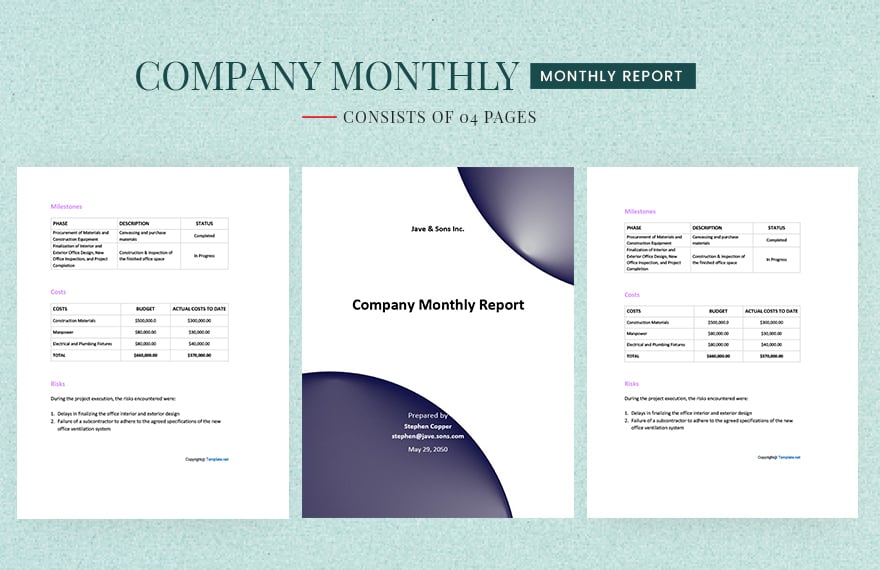
Creating a monthly report is a cornerstone of effective business management. It’s more than just compiling data; it’s about presenting a clear, concise, and insightful overview of performance, highlighting key trends, and informing strategic decisions. A well-structured monthly report can significantly improve communication, accountability, and ultimately, business success. This guide will walk you through the essential steps and best practices for crafting a compelling monthly report template. How To Write A Monthly Report Template is the foundation for a valuable tool that drives transparency and action.
The process of creating a monthly report can seem daunting, but breaking it down into manageable steps makes it achievable. It’s about understanding your audience, defining the key metrics you need to track, and presenting them in a way that’s easy to understand and act upon. A poorly designed report can be confusing and ineffective, while a well-crafted one can be a powerful asset. Let’s dive in!

Understanding the Purpose of a Monthly Report
Before we begin, it’s crucial to understand why you’re creating a monthly report. It’s not simply a formality; it’s a deliberate effort to monitor progress, identify areas for improvement, and communicate performance to stakeholders. The purpose is to provide a snapshot of the company’s performance against established goals, allowing for timely adjustments and proactive problem-solving. Without a clear purpose, the report can become a cumbersome and irrelevant exercise. Effective monthly reports help demonstrate value and build trust with leadership.
The primary goals of a monthly report typically include:
- Tracking Key Performance Indicators (KPIs): Monitoring metrics like sales, revenue, customer acquisition cost, and operational efficiency.
- Analyzing Performance: Identifying trends, patterns, and anomalies in the data.
- Reporting on Progress: Demonstrating whether the company is meeting its goals and objectives.
- Providing Insights: Offering actionable recommendations for improvement.
- Communicating with Stakeholders: Keeping everyone informed about the company’s performance.
The Essential Components of a Monthly Report Template
A robust monthly report template should include several key sections. Each section should be clearly defined and easy to understand. Here’s a breakdown of the essential components:
1. Executive Summary
This is arguably the most important section. It provides a concise overview of the month’s performance, highlighting key achievements, challenges, and recommendations. It should be no more than 200-300 words and should be written in plain language, avoiding technical jargon. How To Write A Monthly Report Template emphasizes the need for this section to immediately capture the reader's attention and convey the most critical information.
2. Key Performance Indicators (KPIs)
This section details the KPIs that were tracked during the month. Clearly define each KPI, explain how it was measured, and provide a visual representation (e.g., a chart or graph) to illustrate the data. Examples include:
- Sales Revenue: Total revenue generated during the month.
- Customer Acquisition Cost (CAC): The cost associated with acquiring a new customer.
- Website Traffic: Number of visitors to the website.
- Conversion Rate: Percentage of visitors who complete a desired action (e.g., purchase, sign-up).
- Customer Satisfaction (CSAT): A measure of customer satisfaction with a product or service.
3. Detailed Performance Analysis
This section provides a deeper dive into the KPIs, examining trends and patterns. It should include charts and graphs to illustrate the data. For example, you might show a comparison of sales performance across different regions or product lines. Consider using a SWOT (Strengths, Weaknesses, Opportunities, Threats) analysis to provide a strategic perspective.
4. Challenges and Opportunities
This section identifies any challenges encountered during the month and outlines potential opportunities for improvement. Be honest and transparent about any obstacles. Also, brainstorm potential solutions and strategies for capitalizing on opportunities. This section demonstrates proactive thinking and a commitment to continuous improvement.
5. Action Items and Recommendations
Based on the analysis, this section outlines specific action items that need to be taken to address challenges and capitalize on opportunities. Each action item should be clearly defined, assigned to a specific person, and have a deadline. The recommendations should be practical and achievable. How To Write A Monthly Report Template stresses the importance of this section for driving accountability and ensuring that action plans are implemented effectively.
6. Appendix (Optional)
This section can include supporting data, such as raw data, detailed charts, or additional information that is not essential to the main report. It’s useful for providing context or supporting analysis.
Best Practices for Effective Reporting
Several best practices can significantly enhance the quality of your monthly reports:
- Use Clear and Concise Language: Avoid jargon and technical terms that your audience may not understand.
- Visualizations are Key: Charts and graphs are more effective than raw numbers. Choose the right type of visualization to effectively communicate your data.
- Focus on Actionable Insights: Don’t just present data; provide insights that can be used to drive action.
- Tailor the Report to Your Audience: Consider the needs and interests of your stakeholders when creating the report.
- Maintain Consistency: Use a consistent format and style throughout the report.
- Regular Review and Updates: Review and update your reports regularly to ensure they remain relevant and accurate.
Conclusion
Creating a well-structured and insightful monthly report is an investment in your company’s success. By following these guidelines and best practices, you can create a valuable tool that drives performance, improves communication, and informs strategic decision-making. Remember, a monthly report is more than just a document; it’s a communication tool that can significantly impact your business. How To Write A Monthly Report Template is a starting point for building a system that consistently delivers valuable insights.
Conclusion
The monthly report is a critical component of effective business management. By meticulously planning, diligently tracking, and presenting data clearly, businesses can gain valuable insights, identify areas for improvement, and ultimately, achieve their strategic goals. A well-crafted report empowers leadership, fosters accountability, and drives positive change throughout the organization. Investing the time and effort to create a robust monthly report template is an investment that will undoubtedly yield significant returns. Continuous refinement and adaptation of the template based on evolving business needs are also essential for maintaining its effectiveness.
0 Response to "How To Write A Monthly Report Template"
Posting Komentar